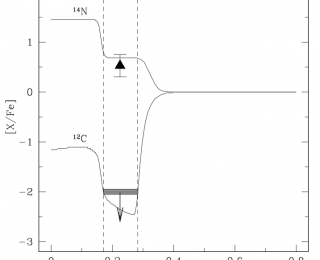
Unveiling the friend of a pulsar
What kind of star is orbiting around a millisecond pulsar and where did it come from?

What kind of star is orbiting around a millisecond pulsar and where did it come from?
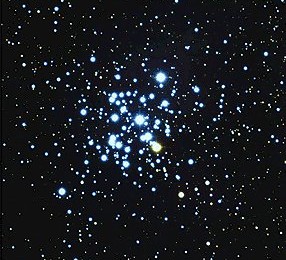
The recent discovery of two planets in an open star cluster implies that planet formation can survive the harsh environments of a dense stellar cluster.
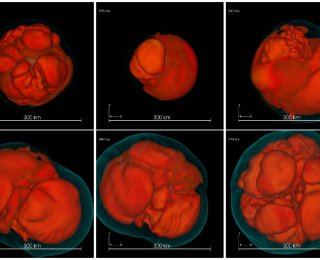
Recent computer simulations are shedding light on the brightest and most energetic phenomena in the Universe – supernova explosions. A team of researchers at the Max Planck Institute for Astrophysics modeled the formation of neutron stars in three dimensions with unprecedented accuracy, showing that as matter is drawn inward, it sloshes both asymmetrically and in spiral motions. It’s a bold, new look into the center of the supernova explosion and the birth of a neutron star.
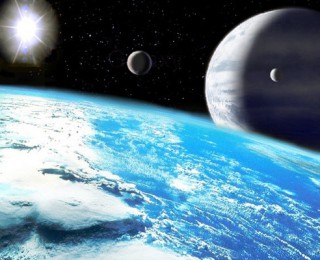
This paper reports that the M-dwarf star GJ667C is orbited by a system of six, maybe seven super-Earths, of which three are in the habitable zone. This is an extraordinarily closely packed system of planets, straight from science fiction!
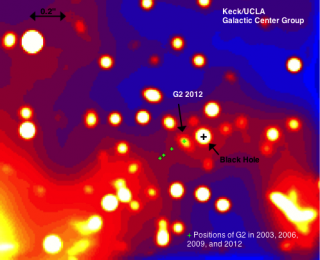
The gas cloud G2 is rapidly approaching the galactic center. Can tidal disruption events with stellar remnants help constrain its orbit?
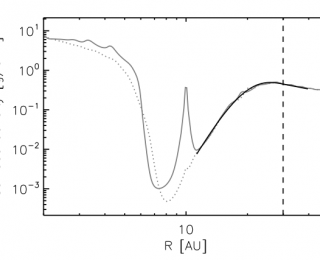
The mass of a substellar companion can help determine whether it’s a planet or a brown dwarf. But how can you measure the mass of a companion that you can’t detect directly? Look at the disk!