• RSS
  • Submit a Guest Post
  • Undergraduates: Submit your Research!
  • Suggest a Paper Topic!
astrobites
  • About
    • About Astrobites
    • Meet the Authors
    • Statement of Inclusivity
    • Copyright & Permissions
  • Latest Research
    • Daily Paper Summaries
    • Classics
    • Undergrad Research
    • Physical Review Coverage
  • Beyond astro-ph
    • Beyond astro-ph Library
    • Interviews
    • Career Navigation
    • Personal Experiences
    • Current Events
    • Teaching with Astrobites
  • Guides
    • EM Spectrum
    • Galaxies & AGNs
    • Spectroscopy and Spectral Lines
    • Adaptive Optics
    • Gravitational Waves
    • Transient Astronomy
    • Astrophysical Software
    • Graduate School
    • Writing a personal statement for grad apps
    • First Observing Run
    • …More Guides!
Select Page
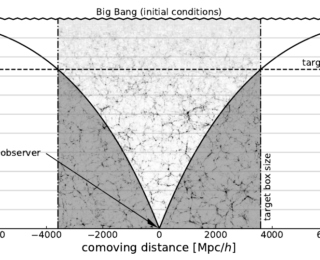
Speeding up cosmological simulations by zooming on what’s important

Speeding up cosmological simulations by zooming on what’s important

by Laila Linke | May 28, 2020 | Daily Paper Summaries

Modern cosmology relies on large numerical simulations. However, creating them requires a lot of memory and computational time. Today’s paper describes a technique that can dramatically decrease the computational cost of simulations – by focusing on the most important parts of the simulation and reducing waste!
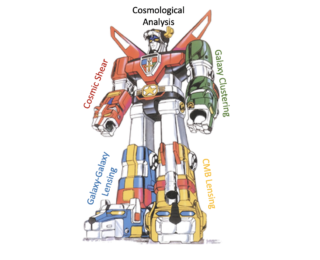
Combining Power by Combining Probes

Combining Power by Combining Probes

by Jamie Sullivan | May 15, 2020 | Daily Paper Summaries

In which cosmologists come up with yet another way to ignore pesky systematics – aka astrophysics!
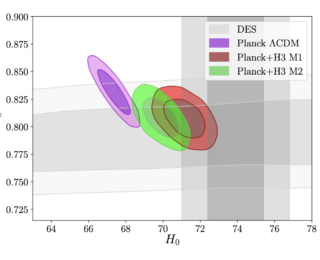
M.A.S.H.: Magnets Add Similarity to Hubbles

M.A.S.H.: Magnets Add Similarity to Hubbles

by Luna Zagorac | May 12, 2020 | Daily Paper Summaries

So that’s what happens when astronomers account for magnetic fields!
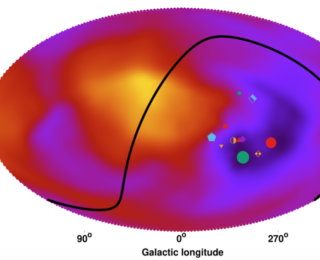
Running up that hill: are some galaxy clusters moving away faster than others?

Running up that hill: are some galaxy clusters moving away faster than others?

by Sunayana Bhargava | May 3, 2020 | Daily Paper Summaries

We discuss a new way to test the cosmological principle using X-ray studies of galaxy clusters in this Astrobite.
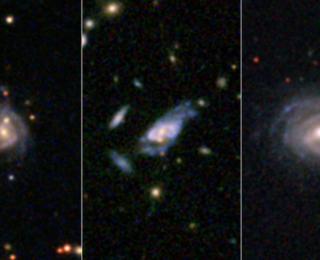
Make Our Galaxy Grow: Massive Disk Galaxies in the Local Universe

Make Our Galaxy Grow: Massive Disk Galaxies in the Local Universe

by Jason Hinkle | Apr 11, 2020 | Daily Paper Summaries

Major galaxy mergers are thought to be one of the main ways of producing massive elliptical galaxies. Surprisingly though, some of the most massive galaxies in the local universe have gas disks. Here’s how they might be made.
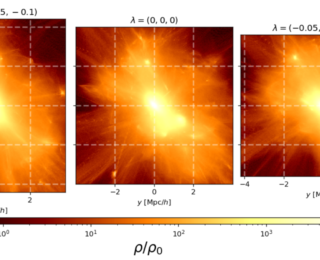
Insert Tidal Here: Stretching and Squashing the Universe

Insert Tidal Here: Stretching and Squashing the Universe

by Jamie Sullivan | Mar 24, 2020 | Daily Paper Summaries

Tide goes in, dark matter halos come out, today’s authors can simulate that! With separate universe simulations!

« Older Entries
Next Entries »

Loading

Follow our socials

  • Bluesky
  • Facebook
  • Instagram
  • RSS Feed

More Posts About

AAS AGN astronomy astrophysics binary stars black holes cosmology dark matter dwarf galaxies exoplanets galaxies galaxy evolution gravitational waves habitability JWST Kepler Milky Way observations planetary science planet formation protoplanetary disks radio astronomy simulations solar system spectroscopy star formation stars stellar evolution supernovae theory

Posts by Category

  • Accessibility
  • Applications
  • Beyond
  • Book Reviews
  • Career Navigation
  • Classics
  • Climate Change
  • Course Assignments
  • Crossposts
  • Current Events
  • Daily Paper Summaries
  • Game Reviews
  • Guides
  • Historical Astronomy
  • Instrumentation
  • Interviews
  • Outreach
  • Personal Experiences
  • PRJ
  • Quick Notes
  • Satellites
  • Teaching
  • Undergraduate Research

More Astronomy

  • AAS
  • AAS Nova
  • astro-ph
  • AstroBetter
  • APOD

Read Astrobites in Other Languages

  • Astrobitos (Spanish)
  • Astropontos (Portuguese)
  • staryab (Farsi)

Listen to Astrobites

  • astro[sound]bites

Discover More Incredible Science

  • ScienceBites Network
  • RSS

© 2026 Astrobites | All Rights Reserved | Supported by AAS | Designed by Elegant Themes | Powered by WordPress