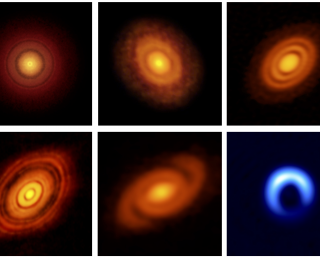
Filling (Dust) Gaps in our Knowledge of Planet Formation
With the awesome power of ALMA, scientists have observed a variety of dust gaps in protoplanetary disks. In today’s astrobite, we explore how these gaps might be related to planet formation.

With the awesome power of ALMA, scientists have observed a variety of dust gaps in protoplanetary disks. In today’s astrobite, we explore how these gaps might be related to planet formation.
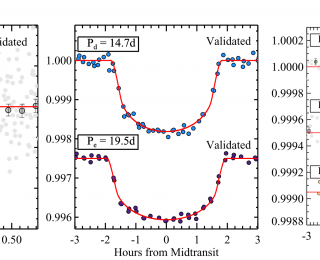
Transiting exoplanets generally orbit in the same plane, so how is this planet so misaligned in this multi-planet system?
We’ve strongly suspected they’re there. A new method promises to prove it.
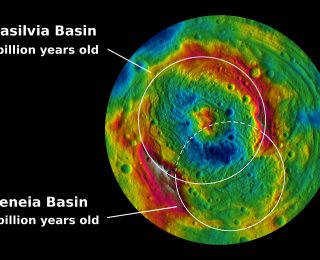
Most basaltic asteroids are thought to originate from the dwarf planet Vesta. However, some of these asteroids are far from Vesta and exhibit different spectra, implying a second point of origin.
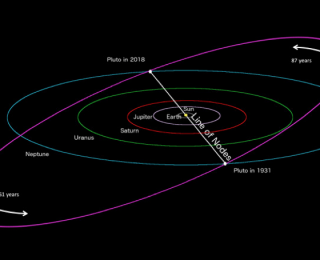
We dive back into one of the earliest studies of the outer solar system that helped us understand how four gas giants playing a chaotic game of catch could have knocked Pluto into its topsy-turvy orbit.
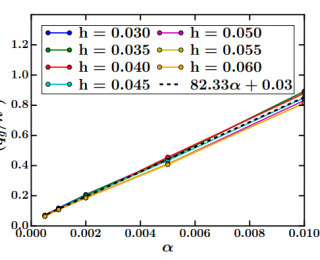
While a planet is forming, its passage through the protoplanetary disk can prevent pebbles from migrating inwards and accreting onto the planet.