by Ian Czekala | Aug 26, 2011 | Daily Paper Summaries
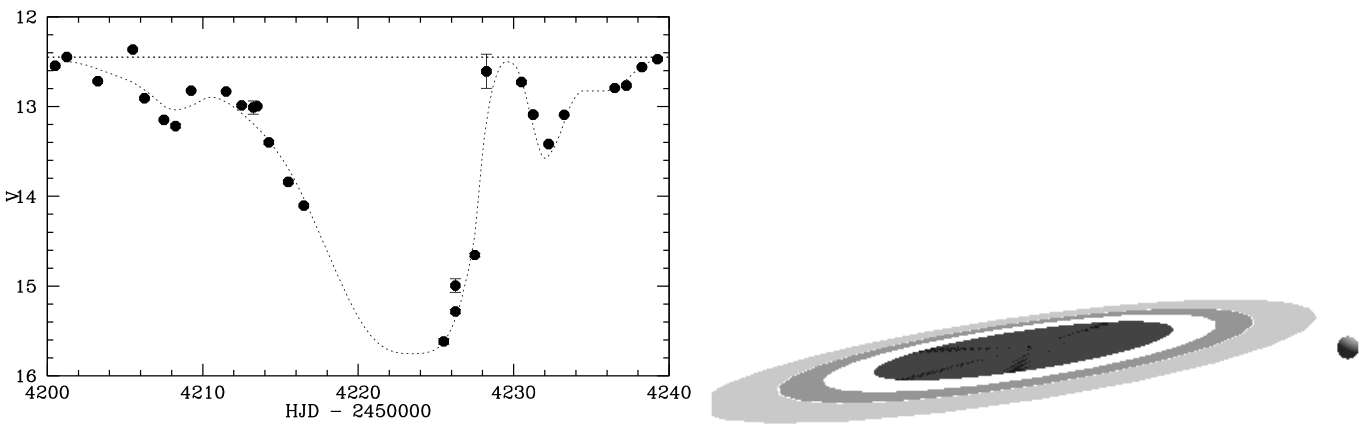
We know other stars have planets. We know that certain stars have circumstellar disks. We know that before there are planets, there must be a protoplanetary disk; we also know that these two states must be connected through a evolutionary path which includes planet formation.
What if–if we were just so lucky–we found a protoplanetary system that had a disk, that was aligned so perfectly, and that was bright enough, and ….
by Dan Gifford | Aug 9, 2011 | Daily Paper Summaries
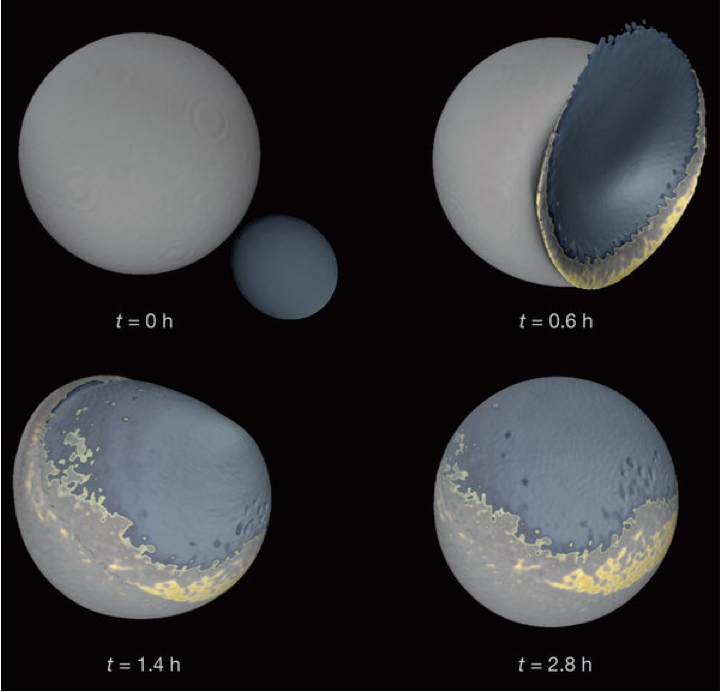
Astronomers think one impact may not have been enough to see the Moon as we do today. If two moons formed out of the massive collision first hypothesized, they could have merged which would explain the terrain dichotomy we see on the near and far sides of our Moon.
by Caroline Morley | Aug 2, 2011 | Daily Paper Summaries
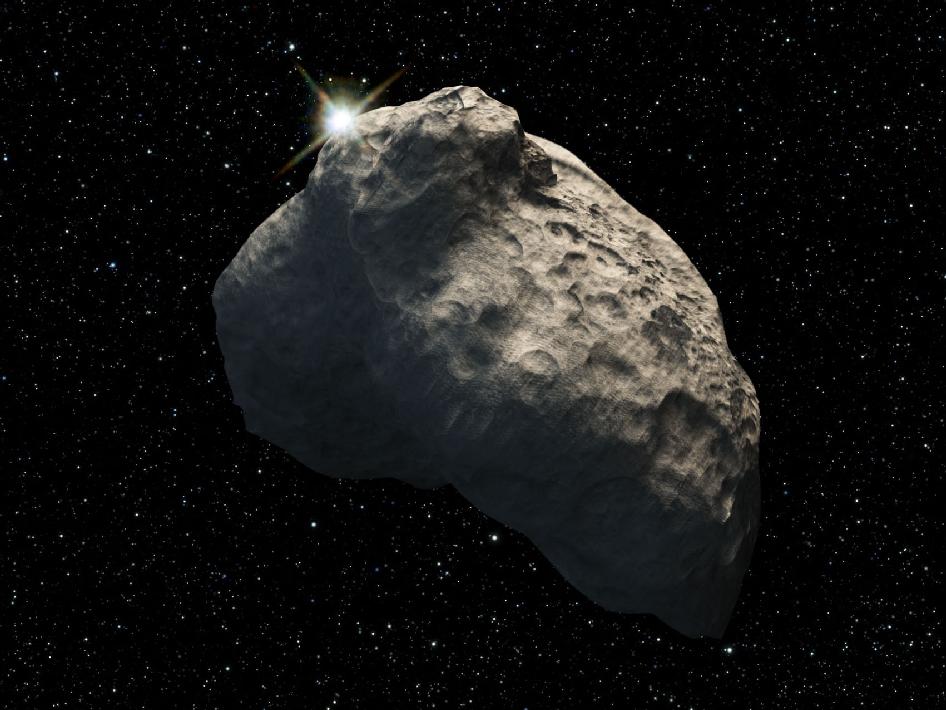
A paper published on the archive this week reveals fourteen newly discovered Kuiper Belt Objects (KBOs) found using ground-based imaging in the Southern part of the sky. Three of these could be big enough to be dwarf planets! By learning about the population, orbital structures, and compositions of the largest objects in the Kuiper Belt, we can learn about the solar system formation and evolution.

by Caroline Morley | Jul 19, 2011 | Daily Paper Summaries
Vesta is a particularly interesting object for learning about the early solar system. It is the second biggest asteroid in the asteroid belt (after Ceres) and is believed to be the sole surviving intact member of a class of objects called planetary embryos. The rest of these embryos either assembled into the planets in the solar system today or were broken apart into smaller asteroids and dust by collisions. By studying Vesta, we can learn about how protoplanets formed and evolved.
by Evan Schneider | Jul 8, 2011 | Daily Paper Summaries
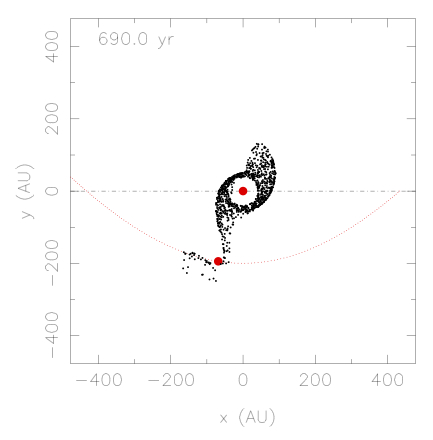
Using a combination of numerical and analytic techniques, the authors of this paper try to answer the question: what does a passing star do to a debris disk?

by Katherine Rosenfeld | Jun 24, 2011 | Daily Paper Summaries
Some astrophysicists must work in space – or as close as they can get – to accomplish their research. This paper discusses an experiment studying how dust can stick together and form planetesimals.
