by Courtney Dressing | Nov 10, 2011 | Daily Paper Summaries
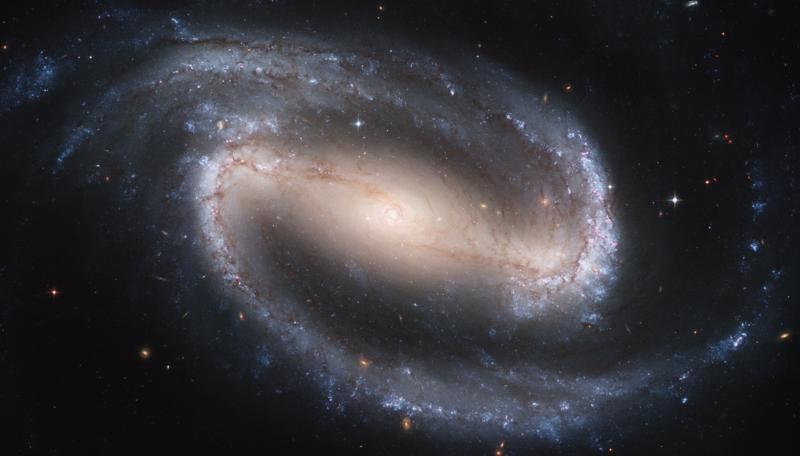
Paper title: Bars rejuvenating bulges? Evidence from stellar population analysis Authors: Paula Coelho and Dimitri A. Gadotti First author’s affiliation:Núcleo de Astrofísica Teórica, Universidade Cruzeiro do Sul, São Paulo, Brasil SummaryAs you may recall from Nathan Sanders’ April post, some spiral galaxies have central bulges with high concentrations of stars. Coelho and Gadotti examine a sample of 575 of these galaxies to investigate whether the presence or absence of a bar (a bar-shaped overdensity of stars) influences the rate of star formation in the central bulge. Astronomers expect to see a higher star formation rate in the bulges of barred galaxies because bars can transport gas from the outer regions of the galaxy into the center and supply fuel for growing stars. Previous detections of star-formation indicators (such as enhanced Hα emission) have indicated that the current star formation rates are higher in barred spirals than in unbarred spirals, but Coelho and Gadotti take the alternative approach of determining the ages of the stellar populations in the bulges. They find that the bulges of barred galaxies are systematically younger than the bulges of unbarred galaxies, which is consistent with the expectation that bars should promote star formation. The Galaxy SampleIn a previous paper, Gadotti derived stellar masses, bulge stellar masses, bar properties, and other parameters for a sample of face-on galaxies observed by Sloan Digital Sky Survey (SDSS). All of the galaxies had stellar masses above 10^10 solar masses and redshifts between 0.02 and 0.07. Selecting face-on galaxies reduced the effect of dust and simplified the process of identifying bars and bulges in the galaxies. In this paper, Coelho...

by Kim Phifer | Aug 28, 2011 | Daily Paper Summaries
How homogenous is the population of Type Ia supernovae?
by Evan Schneider | Aug 1, 2011 | Daily Paper Summaries
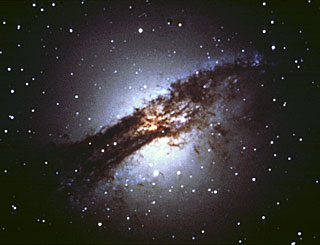
With the help of citizen science through Galaxy Zoo, this paper’s authors collect a large sample of dusty elliptical galaxies, which allows them to investigate the connection between gas-rich mergers, starbursts, and AGN activity.
by Courtney Dressing | Jul 6, 2011 | Daily Paper Summaries
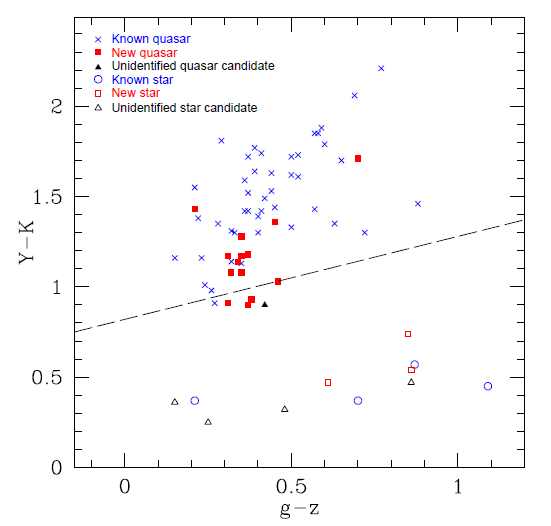
What happens when redshifted quasars masquerade as stars? How do astronomers isolate them from the stellar population?
by Dan Gifford | May 17, 2011 | Daily Paper Summaries
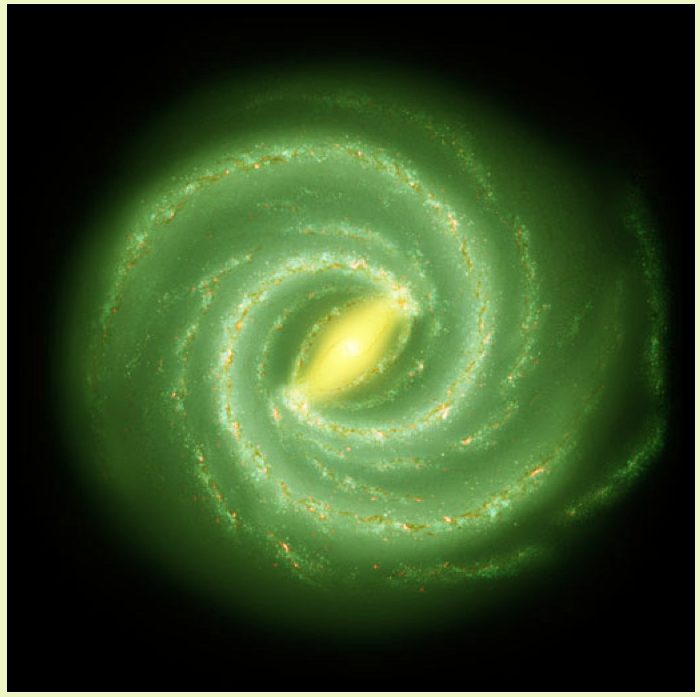
Our Milky Way seems to be passively evolving towards the red sequence… very efficiently!
by Nathan Sanders | May 2, 2011 | Daily Paper Summaries
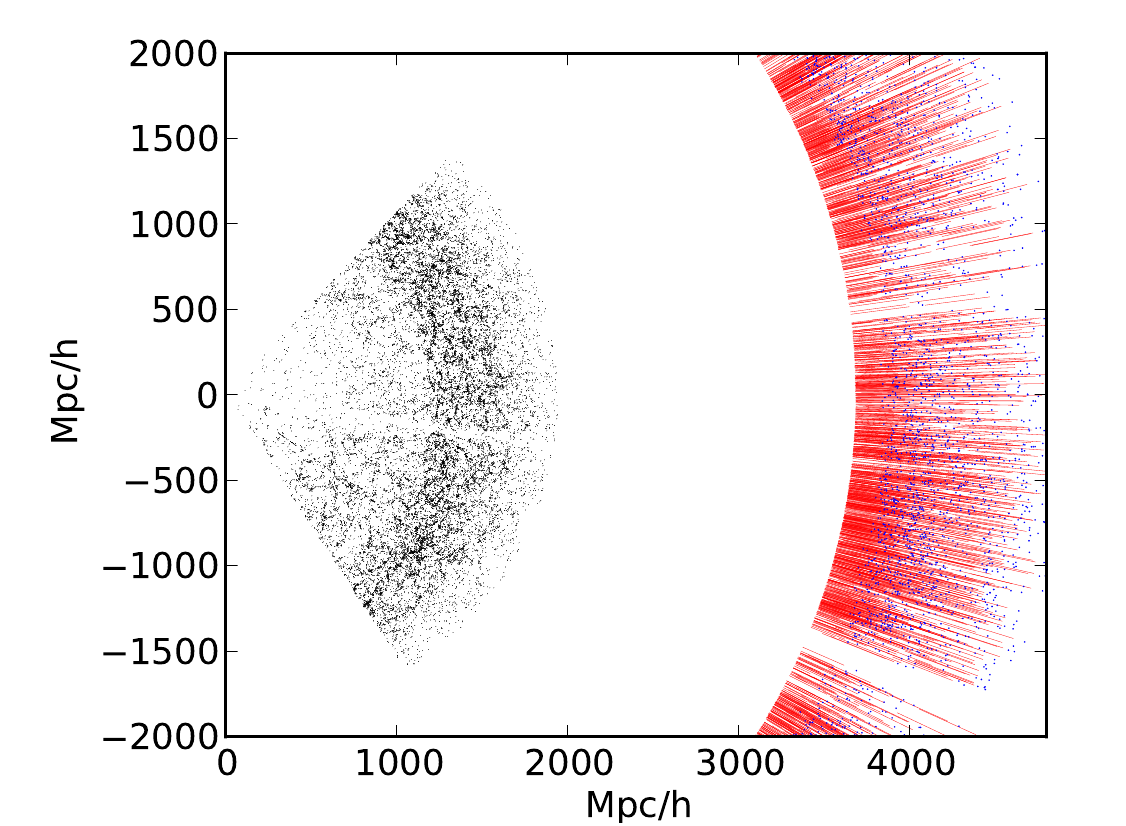
The BOSS project of the Sloan Digital Sky Survey is exploiting the Lyman-α forest in distant quasars to make a 3D map of neutral hydrogen in the early universe.
