• RSS
  • Submit a Guest Post
  • Undergraduates: Submit your Research!
  • Suggest a Paper Topic!
astrobites
  • About
    • About Astrobites
    • Meet the Authors
    • Statement of Inclusivity
    • Copyright & Permissions
  • Latest Research
    • Daily Paper Summaries
    • Classics
    • Undergrad Research
    • Physical Review Coverage
  • Beyond astro-ph
    • Beyond astro-ph Library
    • Interviews
    • Career Navigation
    • Personal Experiences
    • Current Events
    • Teaching with Astrobites
  • Guides
    • EM Spectrum
    • Galaxies & AGNs
    • Spectroscopy and Spectral Lines
    • Adaptive Optics
    • Gravitational Waves
    • Transient Astronomy
    • Astrophysical Software
    • Graduate School
    • Writing a personal statement for grad apps
    • First Observing Run
    • …More Guides!
Select Page
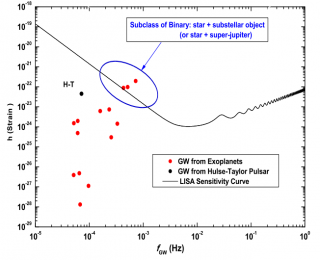
The loudest planets in our sky: gravitational waves from Super-Jupiters

The loudest planets in our sky: gravitational waves from Super-Jupiters

by Aaron Tohuvavohu | Aug 7, 2018 | Daily Paper Summaries

Nearby Super-Jupiters with very tight orbits produce gravitational waves that will be detectable by space-based gravitational wave detectors.
Astrobites at ASA: Astronomy Down Under!

Astrobites at ASA: Astronomy Down Under!

by Daniel Berke | Jul 6, 2018 | Current Events

The annual meeting of the Astronomical Society of Australia happened last week; here’s a short summary of some of the incredible science happening Down Under!
Small black hole meets big black hole

Small black hole meets big black hole

by Lisa Drummond | Jul 5, 2018 | Daily Paper Summaries

What happens as a small black hole spirals into a supermassive black hole?

Meet the AAS Keynote Speakers: Enrico Ramirez-Ruiz

Meet the AAS Keynote Speakers: Enrico Ramirez-Ruiz

by Mia de los Reyes | Jun 3, 2018 | Career Navigation, Current Events

As Carl Sagan said, “If you wish to make apple pie from scratch, you must first invent the universe.” More specifically, to make some neutron-rich elements like gold and uranium, you need neutron star mergers. Check out Professor Enrico Ramirez-Ruiz’s upcoming #AAS232 talk to learn more about what it takes to make the heaviest elements in the universe.
Things that go bump in the detector: dealing with glitches in LIGO data

Things that go bump in the detector: dealing with glitches in LIGO data

by Lisa Drummond | May 28, 2018 | Daily Paper Summaries

Transient noise in the LIGO detector – called “glitches” – can contaminate gravitational wave signals. We need to know how to deal with them, particularly in the case when we don’t know what the signal will look like.

Which Are The Brightest Gravitational Wave Sources In Our Galaxy?

Which Are The Brightest Gravitational Wave Sources In Our Galaxy?

by Matthew Green | May 7, 2018 | Daily Paper Summaries

LISA is a space-based mission to detect gravitational waves. What will be the brightest targets it can see?

« Older Entries
Next Entries »

Loading

Follow our socials

  • Bluesky
  • Facebook
  • Instagram
  • RSS Feed

More Posts About

AAS AGN astronomy astrophysics binary stars black holes cosmology dark matter dwarf galaxies exoplanets galaxies galaxy evolution gravitational waves habitability JWST Kepler Milky Way observations planetary science planet formation protoplanetary disks radio astronomy simulations solar system spectroscopy star formation stars stellar evolution supernovae theory

Posts by Category

  • Accessibility
  • Applications
  • Beyond
  • Book Reviews
  • Career Navigation
  • Classics
  • Climate Change
  • Course Assignments
  • Crossposts
  • Current Events
  • Daily Paper Summaries
  • Game Reviews
  • Guides
  • Historical Astronomy
  • Instrumentation
  • Interviews
  • Outreach
  • Personal Experiences
  • PRJ
  • Quick Notes
  • Satellites
  • Teaching
  • Undergraduate Research

More Astronomy

  • AAS
  • AAS Nova
  • astro-ph
  • AstroBetter
  • APOD

Read Astrobites in Other Languages

  • Astrobitos (Spanish)
  • Astropontos (Portuguese)
  • staryab (Farsi)

Listen to Astrobites

  • astro[sound]bites

Discover More Incredible Science

  • ScienceBites Network
  • RSS

© 2026 Astrobites | All Rights Reserved | Supported by AAS | Designed by Elegant Themes | Powered by WordPress